Institutionalizing a Data-Driven Culture to strengthen Immunization
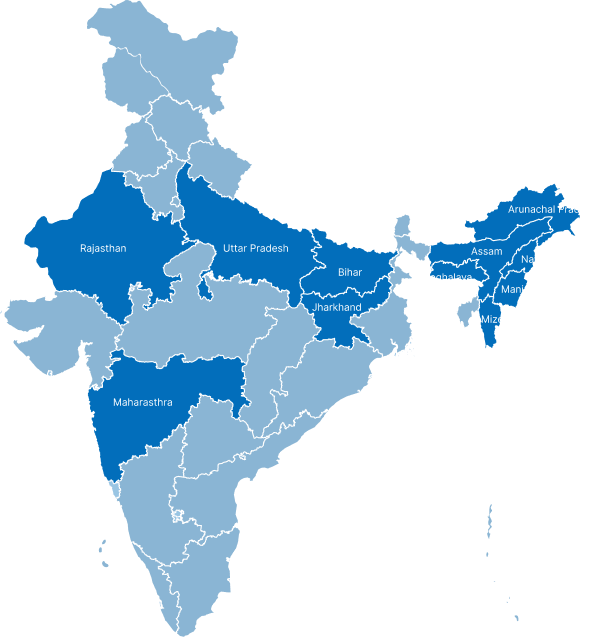
Funded by the UNDP, the Data Analytics project is being implemented under the guidance of the Ministry of Health and Family Welfare (MoHFW). The project is designed to strengthen the country’s Immunization ecosystem by leveraging advanced analytics to generate real-time, actionable insights. The overarching objective is to improve the availability, quality, and use of immunization data to enable evidence-based planning, effective program management and targeted interventions, and strengthened accountability.
Aligned with the Immunization Agenda 2030 (IA2030), this initiative aims to reduce the number of zero-dose children by identifying zero-dose clusters and implementing data-driven strategies. By building stakeholder capacity, fostering evidence-based planning, and embedding structured data use into governance and review mechanisms, Data Analytics project plans to build a resilient, data-driven immunization system that ensures equitable coverage.
The Data Analytics Project will enable key government stakeholders with analytical capabilities and decision-support tools to drive proactive strategies, optimize resource allocation, improve service delivery, and systematically identify and vaccinate zero-dose children in high-priority districts under Gavi’s Health Systems Strengthening (HSS) framework.
Our Interventions
Capacity Building Workshop
Dashboard
Training of Government Officials
Training of ANMs on Tally Sheet filling and Validation
Routine Immunization Session Monitoring
Tally Sheet Monitoring
Our Operational Model
We combine community centric solutions, collaborative partnerships, and data informed approaches to empower local stakeholders and enhance existing systems. By focusing on continuous monitoring, capacity building, and adaptive planning, we ensure long-term, sustainable improvements that create lasting impact.
1.
Strengthening Immunization Data Systems
Triangulation of multiple datasets for more accurate and reliable insights
Use of integrated dashboard and advanced analytics for real-time monitoring
Timely data-driven decision-making to implement targeted, high-impact interventions
2.
Enhancing Data Capacity of Stakeholders
Structured training programs and hands-on mentoring
Decision-support and data quality tools for state and district immunization teams
Building long-term analytical and data utilization skills
3.
Embedding Data Use in Governance and Review Mechanisms
Integrating structured data insights from various portals into routine program reviews
Enabling timely corrective actions, effective tracking and improved accountability
Strengthening monitoring frameworks to sustain immunization coverage