
Reactivating a Village Platform
Village Health Sanitation and Nutrition Committees (VHSNCs), constituted under the National Health Mission, are mandated to serve as village-level governance platforms linking communities with frontline services. Many VHSNCs in Devbhumi Dwarka were observed to be either inactive, irregular in meetings, or limited to record-keeping without actionable follow-up.
Understanding the Local Nutrition Context
In blocks like Bhanvad, comprising 52 dispersed villages, persistent undernutrition was driven by sanitation gaps, dietary limitations, and deeply rooted social practices.
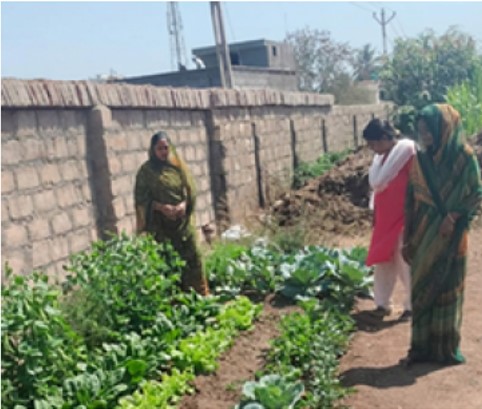
During the COVID-19 pandemic, misinformation and anxiety further intensified vulnerabilities. In several villages, Take-Home Ration (THR) supplied through Anganwadi centres was misutilised, including diversion for animal feed, reflecting limited awareness of preparation methods, restricted vegetable access, and gaps in understanding balanced nutrition.
Gaps were also observed in infrastructure maintenance, service monitoring, maternal tracking, sanitation initiatives, and utilisation of available grants. Convergence between Health, ICDS, and Panchayat institutions required strengthening.
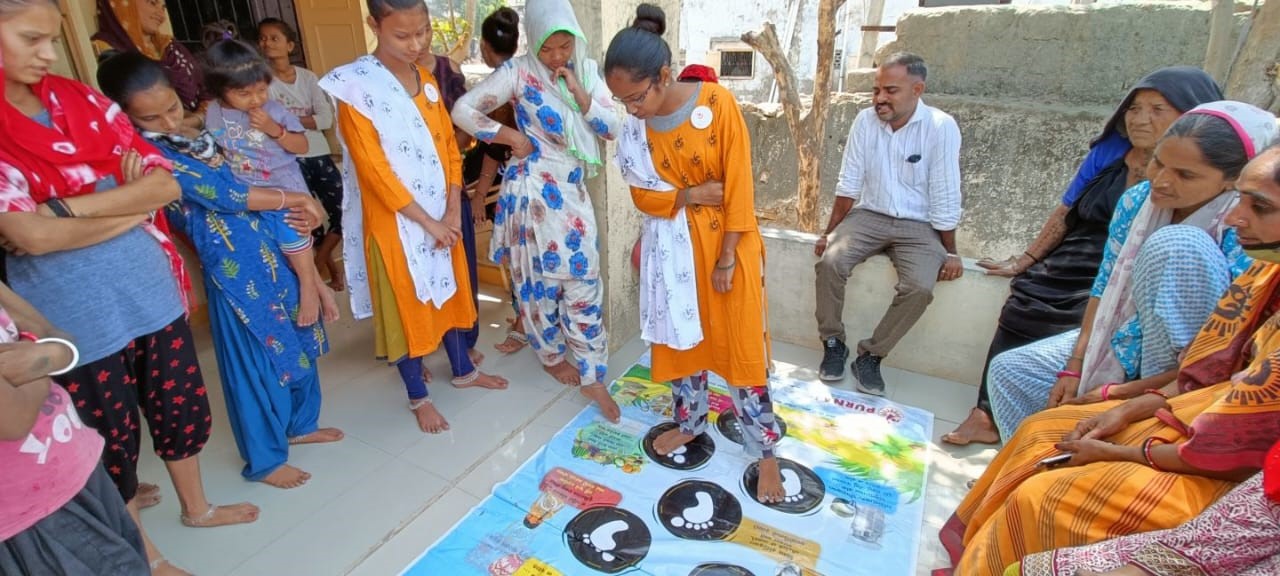
Under Project Tushti, VHSNCs were restructured to ensure representation and active participation. The focus shifted from passive record-keeping to problem-solving around nutrition, maternal health, sanitation, and Anganwadi functioning.
Nutrition and Preventive Health Actions
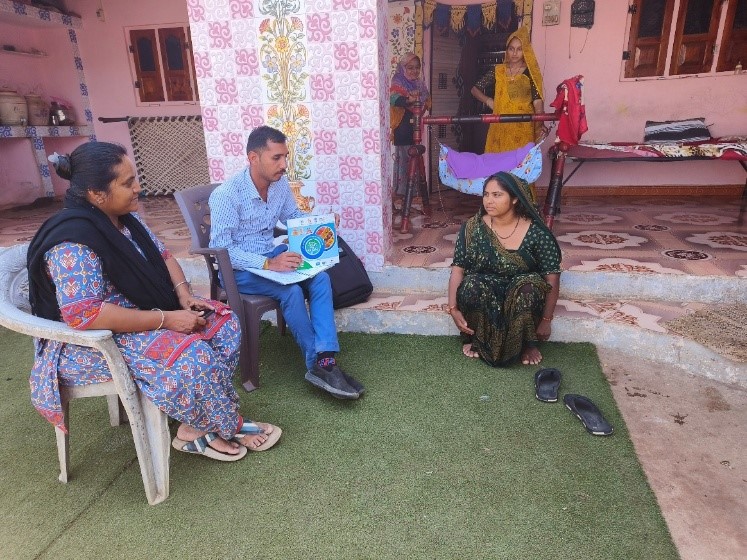
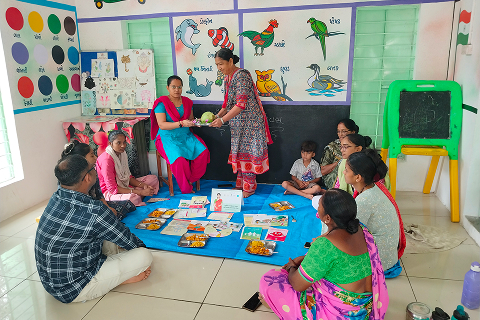
Project Tushti intensified the block-level efforts through structured convergence with ICDS, Health, and Panchayat institutions. VHSNC platforms enabled systematic identification and tracking of underweight children, adolescent girls, pregnant women, and lactating mothers through regular growth monitoring and follow-up.
VHSNC meetings incorporated monitoring of Community-Based Management of Acute Malnutrition (CMAM) and anaemia among adolescent girls. This enabled the timely identification of undernourished children, improved follow-up and treatment of SAM/MAM cases.
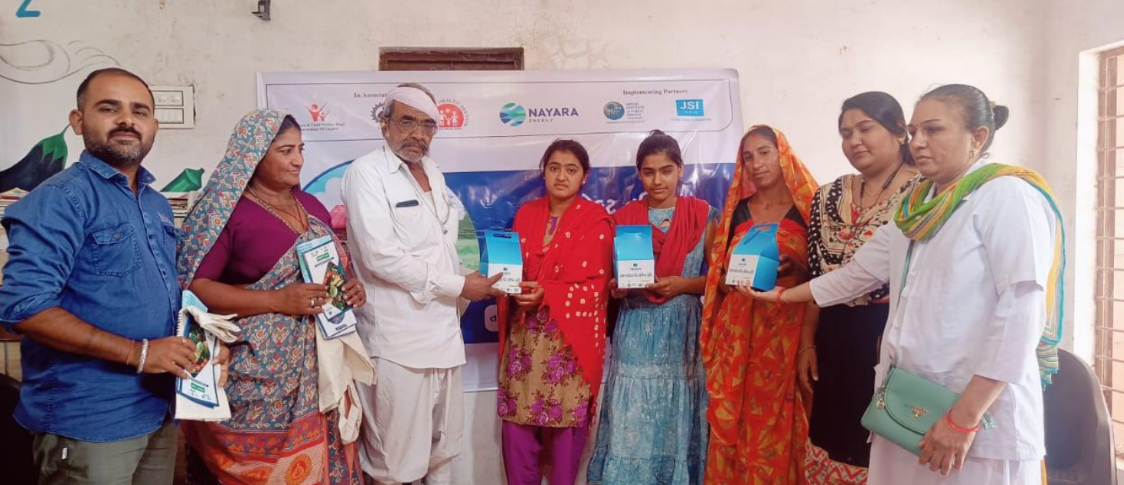
Nutrition kits were distributed in Bhimrana, Shiva, and Jampar. Household chlorination drives were conducted in Gopi and Goriyari, and deworming drives were facilitated. Medical camps enabled screening and treatment of malnourished children, strengthening referral linkages.
Infrastructure Improvements Through Local Action
Strengthened VHSNCs enabled the resolution of local infrastructure gaps. In Mevasa and Bhimrana, Anganwadi, boundary walls were constructed, improving child safety. In Goriyari, a dedicated room was allocated for health team activities. Repairs to sub-centre sanitation facilities were undertaken in Chachlana, and improvements were initiated in Jamrojivada and Khambhalia to strengthen Anganwadi space and functionality.
Service Uptake and Monitoring
Anganwadi service delivery was regularly reviewed to ensure continuity and quality. Panchayat representatives mobilised local resources, reinforced sanitation initiatives, and supported monitoring of vulnerable households. Growth charts and service registers were actively reviewed during VHSNC follow-ups, ensuring that identification translated into improved utilisation of existing services.
Improved monitoring led to higher Anganwadi attendance and immunisation coverage in Mevasa and Rajpara. In Kalyanpur block, pregnancy registration and ANC follow-ups for high-risk and migrant women were strengthened through VHSNC tracking. In Chokhanda, regular haemoglobin testing for adolescent girls was initiated. In Goriyari, structured counselling facilitated the adoption of family planning procedures among previously hesitant women. Pre-school IEC materials were procured using VHSNC grants to improve early childhood environments.
Transition to Malnutrition-Free Status
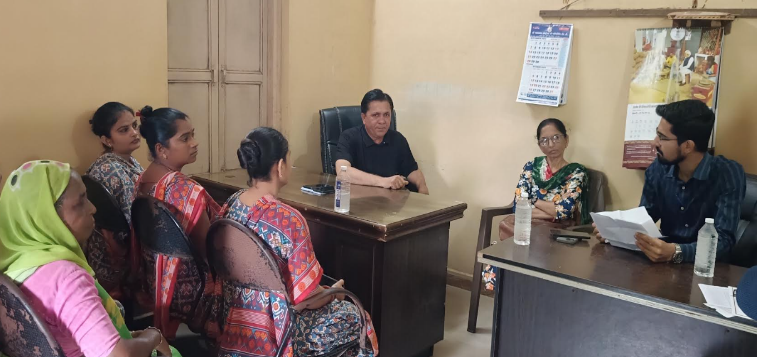
Through institutionalised meetings, documented resolutions, and strengthened convergence, VHSNCs evolved into active governance platforms. Villages including Shiva, Gadu, Jamrojivada, and Mevasa progressed toward Malnutrition-Free status, reflecting improved service uptake and coordinated action across Health, ICDS, and PRI systems.
“As the Sarpanch of Kalyanpur, I have seen that with the support of Project Tushti and the Health Department, Gram Sanjeevani Samiti meetings are now conducted regularly at the Gram Panchayat. These meetings help us understand the health situation of the village, especially regarding malnutrition among children and anemia among adolescent girls.The discussions also help us learn about government programs and ensure that villagers receive the necessary services. The Gram Panchayat is happy to extend full cooperation in supporting these health initiatives.”
-Vikrambhai Bela
Sarpanch, Kalyanpur Gram Panchayat
“As the Sarpanch of Shiva village, I am proud to share that through the joint efforts of the Panchayat, Anganwadi workers, health staff, and the Project Tushti team, our village has now become Suposhit. Today, there are no malnourished children in the village, and pregnant women are receiving proper care and giving birth to healthy babies. Regular awareness activities, growth monitoring, and community participation have played an important role in this achievement. I am happy that our village is moving towards a healthier and stronger future.”
-Sarpanch, Suposhit Shiva Village