
A Closed Social Ecosystem
Mevasa village, with a population of approximately 1,200, is a traditionally conservative settlement largely dependent on farming. Social restrictions limited women’s mobility, girls discontinued schooling after Grade 7 due to lack of nearby facilities, and outsiders were generally not welcomed. Traders avoided the village, and engagement with external institutions was minimal.
Within this environment, health and nutrition services faced resistance. Anganwadi attendance was low, vaccination uptake was limited, and maternal reporting was delayed due to entrenched beliefs and superstitions.
Identifying Barriers to Service Uptake
Engagement with the Anganwadi Worker and village leadership revealed widespread misconceptions. Vaccination was associated with fever and tumour formation. Some believed immunisation was unnecessary. Pregnant women were often not reported to the Anganwadi or ASHA until five months due to social customs. Children were weighed only at religious sites, not at health centres.
These beliefs directly affected Mamta Day participation, growth monitoring, and immunisation coverage.
Entry Points Through Local Platforms
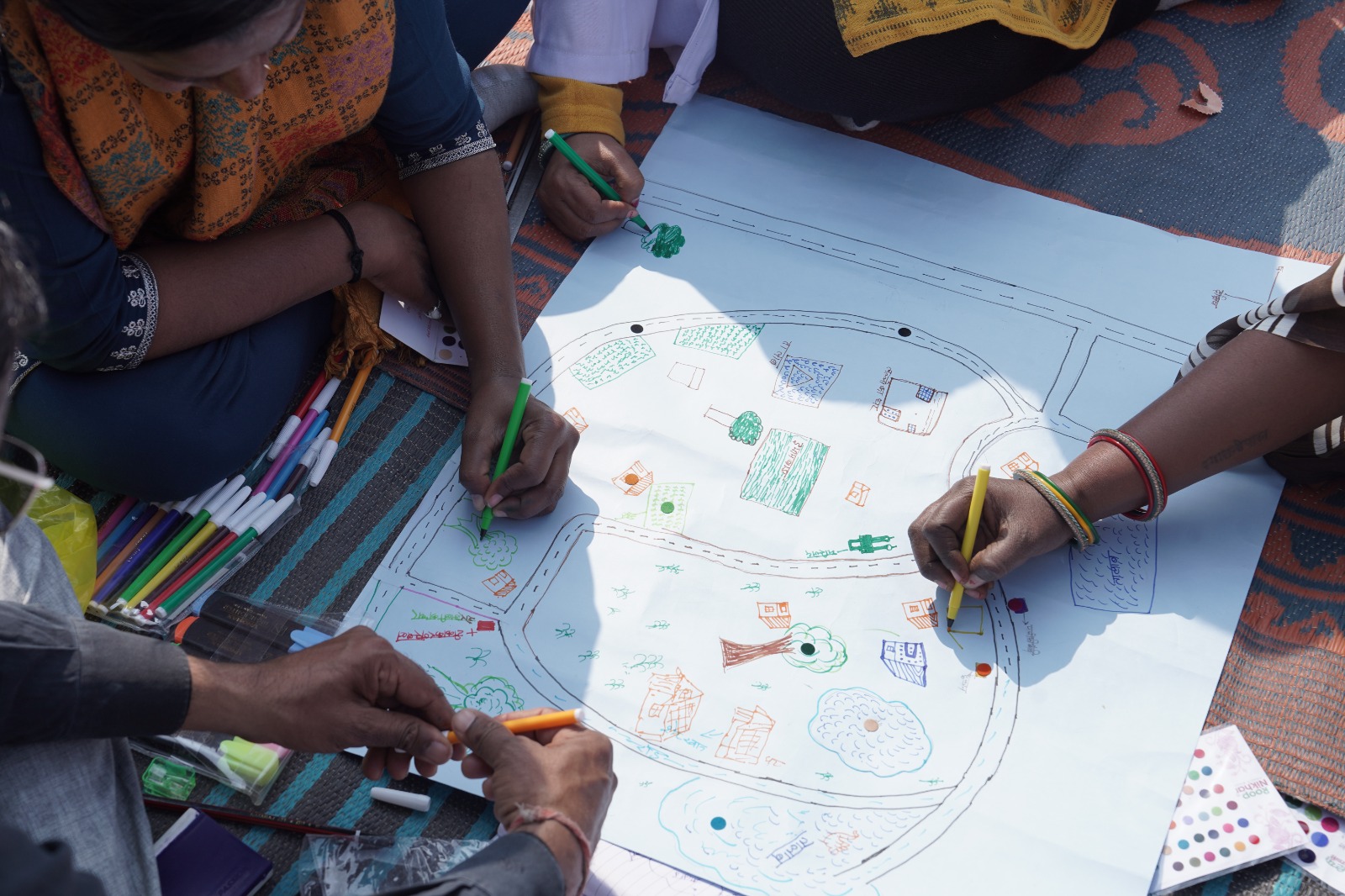
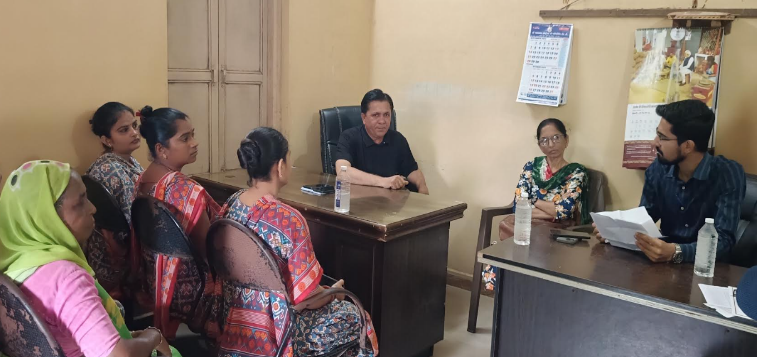
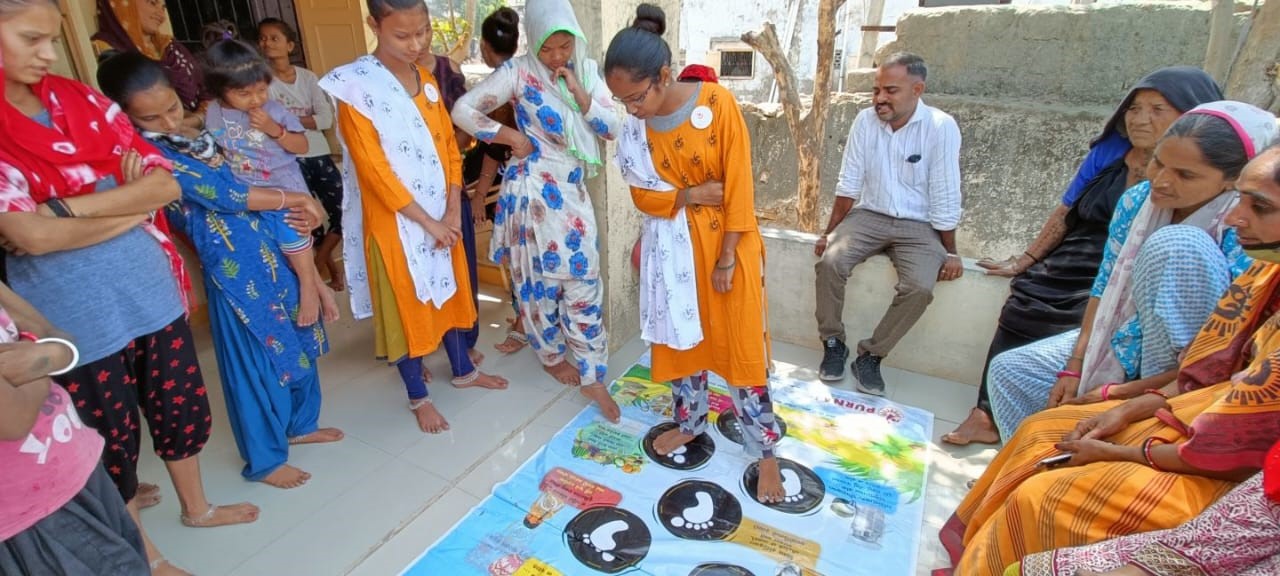
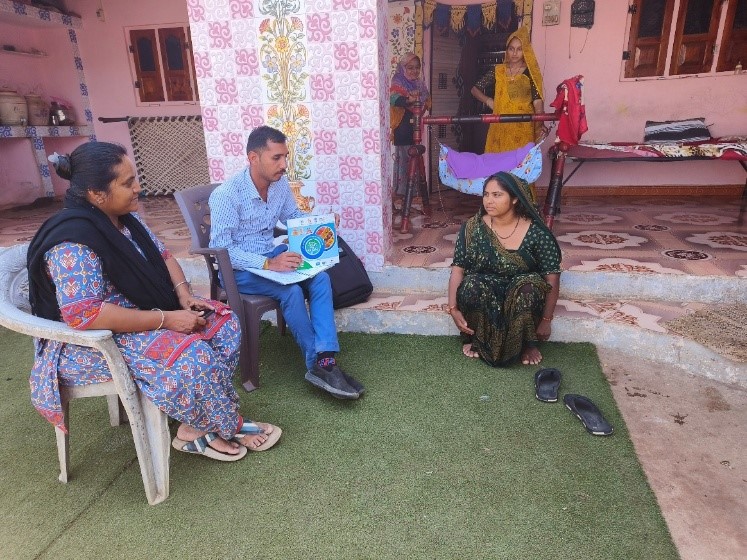
Initial engagement required trust-building. Meetings were conducted with the Sarpanch, youth groups, and community members. The Field Officer from Project Tushti joined evening Swadhyay Sabha gatherings- an accepted spiritual forum to initiate dialogue within an accepted social setting. Gradually, discussions shifted from general village concerns to maternal and child health. The ASHA Worker and Field Officer conducted small group meetings to explain the scientific basis of vaccination reactions, clarify misconceptions, and emphasize the risks of delayed ANC and missed immunisation. A staff nurse accompanied the project team for door-to-door vaccination, combining service delivery with on-site counselling.
Activation of Mamta Divas
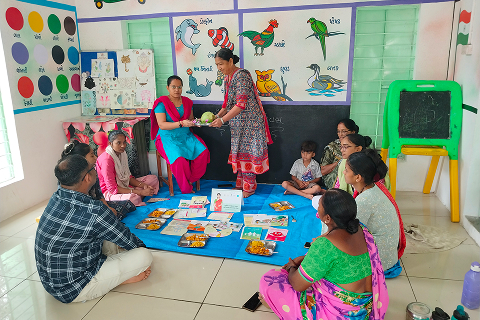
Through repeated engagement and visible follow-up, Mamta Divas participation improved. Pregnant women began timely registration, children started coming to the Anganwadi for weighing and vaccination. Growth monitoring resumed within institutional settings.
Improved Dietary Diversity
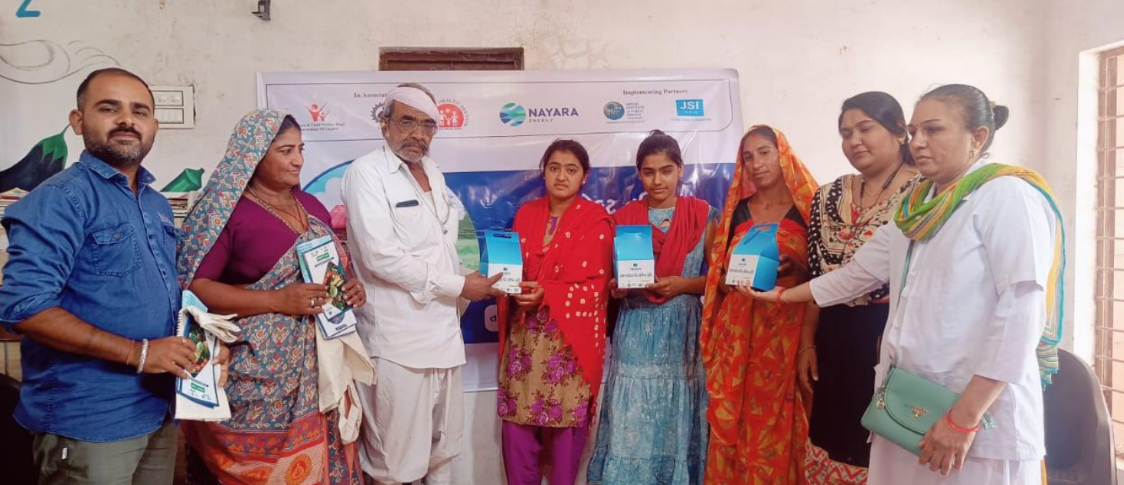
Nutrition practices also began to improve. Initially, Take-Home Ration packets were underused, with some households feeding them to livestock. Project TUSHTI introduced recipe booklets, demonstrations, and cooking competitions to promote their use. Gradually, adolescent girls and pregnant women began incorporating the rations into regular household diets.
Sustained Immunisation Coverage
Over time, hesitancy reduced, and service uptake normalised. Mevasa village achieved 100% vaccination coverage for five consecutive months, marking a significant shift from earlier resistance.
This transition reflected strengthened coordination between the ASHA Worker, Anganwadi Worker, health staff, Panchayat leadership, and Project Tushti, supported by continuous dialogue and culturally adaptive engagement strategies.
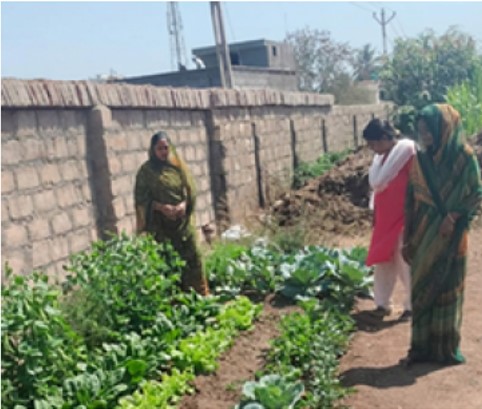
“I have seen significant positive changes in our village due to the efforts of the Project Tushti team. Children now attend the Anganwadi regularly and pregnant women and children receive timely vaccinations. Nutrition garden kits and community meetings have increased awareness about health, nutrition, and hygiene among villagers. I am very happy that this project has brought meaningful improvements and a healthier environment to our community.”
– Manek Sukalbha, Sarpanch of Mevasa village