Project duration: 1 year | Geographical Reach: Haryana | Beneficiary Reach: Reached 10,000+ children in 0-2 years, 1500+ dropouts identified and 900+ children restarted vaccination, 30+ Awareness camps organized, 900+ community members were oriented, 100+ champions rewarded for completing immunization, 11000+ outgoing calls done through IVRS, Job aids developed for ANM on correct use of Syrup Paracetamol and distributed to 100+ANMs, IEC flex distributed to 200+ health facilities

Improved immunization coverage by reducing dropout rates

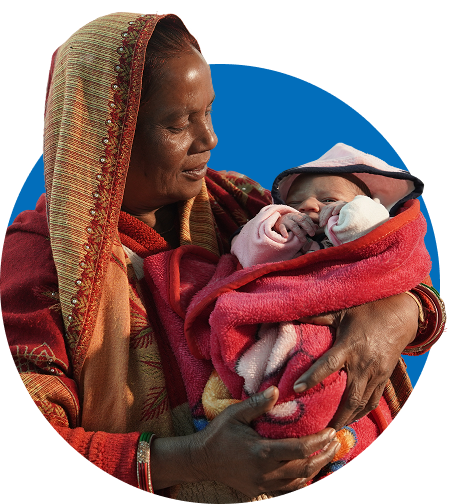
In partnership with GSK Asia Private Limited, Pratiraksha – Suraksha Ki Dor was implemented in Rewari district, Haryana. The initiative aimed to improve routine immunization coverage by reducing dropout rates, with a key focus on promoting paracetamol use to manage post-vaccination side effects in children aged 0–2 years.

Our Intervention Areas

We combine community centric solutions, collaborative partnerships, and data informed approaches to empower local stakeholders and enhance existing systems. By focusing on continuous monitoring, capacity building, and adaptive planning, we ensure long-term, sustainable improvements that create lasting impact.

1.

Social and Behaviour Change Communication (SBCC) and Community Engagement

A multi-channel SBCC strategy drove awareness through home visits, mothers’ meetings, caregiver counselling, WhatsApp messaging, and IVRS-based communication to promote positive health-seeking behaviours.

2.

Frontline Capacity Building

ASHA, ANM, and Anganwadi Workers and their supervisors were continuously trained to identify, engage, and reconnect dropout families for timely and complete immunization.

3.

Supply Chain Management

An innovative Excel-based tracking application was developed to monitor paracetamol availability in real time, flagging stock-outs, inadequate inventory, and logistical gaps.

4.

Beneficiary Tracking Mechanisms

“Suraksha ki Dor”, a visual tracking tool, was introduced to help caregivers monitor their child’s immunization schedule, bridged the gap between health systems and community understanding.

5.

Incentivization and Recognition Frameworks

A non-monetary incentive model rewarded caregivers who completed one- and two-year immunization milestones with talk time, data packages, or books, complemented by public recognition at community meetings.

Message Us